Showing posts with label Recurrence. Show all posts

Saturday, April 23, 2016

Day 577

All this talk about melanoma has almost made me feel badly about neglecting my other cancer baby: papillary thyroid cancer.  


577 days ago, a few months into my melanoma diagnosis, I was diagnosed with a second "primary" cancer, a tumor on my thyroid gland.  It appeared on my CT scans for melanoma and I was instantly referred to the head of Head & Neck Surgery at Sunnybrook, in late September, 2014.  I had surgery to remove the tumor - and my thyroid gland as well as 2 of 4 parathyroid - in December 2014.  

It was at this point in my melanoma journey I truly moved from the denial stage to a deep-seated fear.  
The painful needle biopsy of a lymph node in the base of my throat showed a metastases of cancer from a tumor (on my thyroid) to the surrounding nodes, but it confirmed that the cancer spread was that of a new type of cancer, not a melanoma.  Believe it or not, that was the good news.  

Melanoma spreads silently, appearing anywhere in the body other than its original site, but this... this was a new one.  Which made it "less dangerous" than that of a spread of melanoma.  And this is where my fear deepened.. my fear of melanoma that is.  

Here I was, with a double-whammy of cancer (which is now a source of wary fodder in our household), planning surgery and treatment of papillary thyroid cancer in between that of melanoma.  
For those of you who have been reading this blog all along, you understand why I have been so pissy.  For those of you who may be new to this blog.. please understand this is another reason why I have been so pissy! 

I thought I would re-cap the highlights of my journey through thyroid cancer, for anyone who may wish to hear more about it, or may wish to connect if they are in the same boat.  I had thyroidectomy in December 2014, I had radioactive iodine treatment in March 2015, I take Levothyroxine Sodium 200 mcg daily (one hour before coffee every morning!) for thyroid hormone replacement plus TSH (Thyroid Stimulating Hormone) suppression (due to my intermediate-risk of recurrence).   

Today's melanoma anniversary also marks the time that I would be able to become pregnant again should I so wish to do (which I do NOT); I signed a contract saying I wouldn't become preggers for a year after I-131 Radioactive iodine treatment as it would harm a baby.  I am now deemed clear of said radiation.

In any case, here is a re-cap of links from my thyroid cancer journey since September 2014:

Well... THAT happened.

Dreaming of morning coffee on a sunny day

Lymph Nodes

Radioactive Iodine Treatment, Part 1

Low Iodine Diet

Highs/Lows of my 2-week LID

Radioactive Iodine Treatment, Part 2 

Radioactive Iodine Treatment, Part 3

Life After Thyroid Cancer 

Nuclear Medicine Scan - Thyroid 


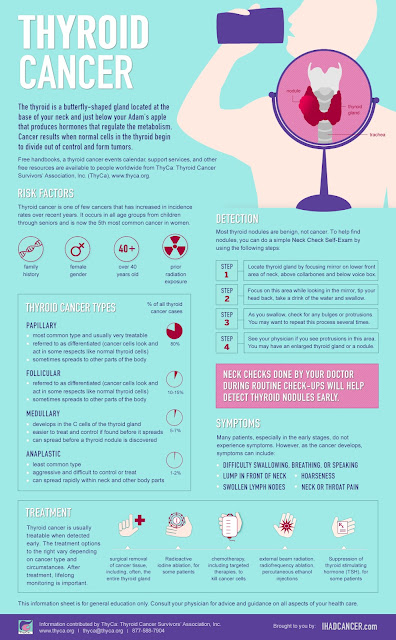
https://www.ihadcancer.com/h3-blog/09-27-2013/thyroid-cancer-a-visual-guide


PS - the 577 days was slightly more difficult to calculate than the 732-day(2 year) melanoma anniversary, so I used a little calculator site


Saturday, March 5, 2016

I am a "Special Snowflake"

And no, I am not referring to my prematurely grey hair, because of which Claire calls me "Snowball." 

Yesterday I had the pleasure of meeting a new medical professional I have chosen to add to my team: a Naturopathic Doctor in Collingwood referred by one of my CCAC Nursing friends (CCAC says I'm a lifer, they will visit me every month on an on-going basis).  I adore the ND I have seen in the past, but I have chosen to go with this route as I need a specialist in post-cancer treatment care, specifically one who understands the details of immunotherapy and cancer side-effects.  Plus I travel in the Collingwood-Barrie-Toronto direction far more frequently than Owen Sound. 

This lady obviously does know the ins-and-outs of the beast called immunotherapy (for me, it was ipilimumab) - wow what a conversation in the place of one hour!  I am a reasonably informed patient, but I learned stuff yesterday that has already helped me to feel better and understand a bit more of what is happening in my foreign-feeling body.  

After a thorough explanation of my family physician's and medical oncologist's and endocrinologist's words and recommendations, I also summarized my 20-year experience with natural/alternative remedies/treatments and my preference toward using them in combination with a healthy diet of vegetables and "bird seed."  I was hoping to give her a high-level overview of my knowledge and personality so that she would know we don't have to start from scratch, ie. I already know what it is to be a vegetarian, to take vitamin supplements, and to be connected to my mind-body needs.  

I didn't want to spend any of my hour reviewing why I need to take calcium supplements; I want to cut to the chase: I am desperately trying to avoid further use of prednisone, imodium, and anything to do with the word colonoscopy.  

We reviewed all of the things my body, my family, and I have been through in the last two years; please bear with me while I write a quick review, in order, from April 2014 to now:
- diagnosed with stage 3b nodular metastatic melanoma with a relatively high rate of mitoses (spread)
- surgery to remove 13 lymph nodes (4 of which were positive for cancer) in my hip/groin as well as a second surgery to take a bigger hunk out of my original mole (tumour) site to get clear margins, this involved eight weeks strict bedrest, a round of antibiotics and a nerve-repair drug called Gabapentin, a month of recording the contents of daily drainage bottles attached to the interior of my incisions, and a mountain of stress and fear over what was to become of me 
- diagnosis of lymphedema in my right leg
- a 68-week course of 8 treatments of a potent immunotherapy on clinical trial for stage 3 melanoma, ipilimumab (affectionately known in my family as pacmen)
- a diagnosis of papillary thyroid cancer, thankfully not a melanoma, it was a separate, second primary cancer
- onset of side-effects from ipi treatments 3 weeks apart ie. fatigue, chemo brain, tummy trouble
- surgery to remove thyroid gland, tumour on thyroid gland, 2 parathyroid, and 37 lymph nodes (10 of which were positive for cancer)
- staph infection in my thyroidectomy incision, antibiotics, drainage bottle
- lymphedema in my neck and shoulder
- the weight gain really began
- I-131 radioactive iodine treatment to zap any remaining thyroid cancer cells, the result of which shows an intermediate risk of recurrence due to remaining level of irradiated thyroid cells showing on nuclear medicine scan
- CT scans every 3 months, ongoing, with toxic contrast dye injections every time
- a course of Prednisone to try to alleviate the tummy trouble which my oncologist feels should be on its way to disappearing by now.  Of course I would end up in the 20% of patients that end up with high-grade diarrhea from this trial.  I have before mentioned I am "lucky" in this regard.

Apologies to those of you who know my story already, I needed to summarize for new readers and for myself.  
Writing this list this morning has created simultaneously the feelings of stress and tension for all the crap I have been through, but also a feeling of accomplishment for surviving all the crap I have been through (to date).  This is my journey, and though some days it feels like it's never going to EFF-ing end, I still feel motivated to try to improve it: the journey, and myself, inside and out.  

Back to the ND and the Special Snowflake stuff... 

We discussed in detail the issues around my thyroid, ahem, or lack thereof.  Upon thyroidectomy, every patient has to take a daily thyroid hormone replacement in the form of a little pill, to be taken every morning with a full glass of water, one hour prior to coffee or any other food, beverage, or supplement.  

My dose is the highest they prescribe, I knew that.  But until yesterday I didn't know why.  ND explained that this high dose while it may be too much for my body, it is necessary to keep my remaining thyroid cell stuff suppressed, in order to help avoid thyroid cancer recurrence.  Wow okay I didn't realise that before.  I think it is true what they say, in a doctor's office you hear only 50% of what they say (especially in an oncologists office!) - my family physician has patiently explained this stuff to me before but I still didn't quite get it.  

Having said that, the high dose of thyroid hormone causes my body a bit of confusion.  It actually makes my body HYPERthyroid, which means faster metabolism, spurts of energy/hyperactivity, mood swings, insomnia, fatigue, muscle weakness, and guess what - diarrhea.  So because I have no thyroid I am not automatically HYPOthyroid?  

No... not exactly.  My body is roller-coastering between hyperthyroid and hypothyroid because the excess hormone replacement is being used by my body in a thing called "Reverse T3."  
The ND explained it well but my chemo brain is currently restricting my explanation of the details.  She told me to look it up and I did, here are a couple of links that explain things in line with what ND said: http://www.stopthethyroidmadness.com/reverse-t3/  and http://www.holistic-hypothyroidism-solutions.com/reverse-t3.html

The trick is, there is nothing we can do to treat my symptoms of hyper/hypo/reverseT3 stuff.  It is more important for me to live with these symptoms than to have the thyroid cancer come back.  
That's putting it simply but it is the end of that conversation.  I think family doctor will be happy to hear that because she (and endocrinologist!) doesn't want anyone messing with my thyroid levels/meds.  Bottom line Natalie: You are a SPECIAL SNOWFLAKE.  Suck it up Snowflake.  :-)

About the post-immunotherapy colitis symptoms however, I have news.  We are going to try a three week course of high dose of probiotics.  The good ones, the friendly bacteria.  

This is not the eat-two-yogurts-a-day challenge, this is take-a-minimum-of-50-billion-live-critters-every-night at bedtime, no matter what.  Swallow 4 capsules of nature's bounty.  Sounds good to me, I already had an inkling that these may help, in fact, this is the bottle I always keep on hand and have taken sporadically but had on my list of question for ND as to how to take them properly?  I know they are sensitive little bugs and taking them incorrectly can make them redundant:


She said we have a coin-toss chance of success with this, but it is worth a try.  If that doesn't work, we will investigate food intolerances.  Yikes, I hope the probiotics work, as I consume pretty much only the stuff I like! so... if I have food (or wine) intolerances that are causing my flare-ups then I will be a cranky camper.  

Chances are that all of the treatments/meds/antibiotics I have had have caused a Dysbiosis (also called dysbacteriosis) - a term for a microbial imbalance on or inside the body. Dysbiosis is most commonly reported as a condition in the digestive tract.  This would be understandable due to all the stuff on that list I wrote above.  

The other factor is that in my 20's I was diagnosed with Irritable Bowel Syndrome, and from that I have learned a lot about my food choices and intolerances (to gluten, for example, though I eat gluten anyway silly me).  For the most part those settled down over the years, but now with the intense immunotherapy treatment my digestive system has quite likely been provoked into reacting again to food intolerances OR it has developed entirely new intolerances.  

Should the probiotics not work, I will write about that more as we explore the options.  This post is long enough!  
Geesh... if you're still reading, thank you.   


PS - Don't worry... I won't let all of this "Special Snowflake" stuff go to my head!  My family keeps me firmly grounded with commentary such as Cassandra's observation yesterday that "Mom - EVERY snowflake is special, because they are all unique!"  *sigh* Thanks Cass.  ;-)


Friday, October 2, 2015

The "R-Words" in Cancer

Long before I was ever diagnosed with the big C, I rode along the congratulatory wave whenever in the presence of someone declared "In Remission."  

I didn't really know what it meant, except that it was good, and that commonly, after a number of years "In Remission" a cancer patient could call themselves cancer-free.  They could also resume normal living, recover from treatments, and reside in the general hope that they would remain in remission and their cancer battle was one they could proudly refer to as having been in their courageous past.  

I have yet to hear any of my oncological team say that word, in reference to myself or to anyone we have spoken about.  I don't know if it's an 80's term?  Or one for cancers other than melanoma?  Or a fictional definition?  

It can't be fictional or old-fashioned, because I have several cancer friends and family members who have been officially titled In Remission.  For years in fact, and recently!  
My vision-of-beauty breast-cancer Survivor Auntie for example, and my world-traveling Gramma who is surviving not one but two diagnoses! My Uncle too. And my local friend who battled a brutally complicated tumor and has worked incredibly hard to recover and create her new normal.  I even met a friend in a support group in the winter who is battling her FOURTH primary.  That means four different cancers throughout her life, and she is still fighting.

All very inspiring people who have every right to be proud of their accomplishments and bravely continue their fight every day.  I look up to them, and I admire them, as I do all of the cancer friends I have met along this journey, whatever stage or phase they may be at.  

I envy them as well.  I want to be In Remission.

In my experience, I am consistently informed of another R-word in cancer: Recurrence.  I have written this word in passing several times, but until now have not really explained it.  

I remember thinking a few years ago when a friend was explaining details of his wife's cancer that I couldn't possibly ever understand the kind of stuff he was talking about, the words and phrases and percentages and what it all meant!?  But now I throw these words around without taking into consideration that those listening to me may wonder what the heck I'm talking about.  

Dictionary.com gave me these definitions:

 Remission (Medicine/Medical):
  • a temporary or permanent decrease or subsidence of manifestations of a disease.
  • a period during which such a decrease or subsidence occurs:  The patient's leukemia was in remission.
  • A period during which symptoms of disease are reduced (partial remission) or disappear (complete remission). With regard to cancer, remission means there is no sign of it on scans or when the doctor examines you.
Recurrence (Medicine/Medical): 
  • A return of symptoms as part of the natural progress of a disease, as in relapsing fever. 
  • Cancer recurrence is defined as the return of cancer after treatment and after a period of time during which the cancer cannot be detected. (The length of time is not clearly defined.) The same cancer may come back where it first started or somewhere else in the body. 
My future is based on my likelihood of recurrence.  I have diagrams drawn by my oncologists depicting what the percentages and statistics say about my two primaries (Papillary Thyroid Cancer and Nodular Melanoma), and I struggle every day to overcome the numbers that seem to be very clear to my medical professionals.  

I am at "Intermediate" risk for recurrence of papillary thyroid cancer, based on the results of my post-radioactive iodine treatment full body nuclear medicine scan in March.  Here is a very informative website re-capping much of what I have described or am experiencing: American Thyroid Association

As for the melanoma?  Not so easy to define, and certainly more depressing.  The reason for the 68-week clinical trial was to try to extend the time before inevitable recurrence of melanoma.  Typically someone in my situation after the node dissection surgery I had in May 2014 is given approximately nine months until the melanoma "returns" or is detected elsewhere in the body.  The pacmen are the best defense at the moment to delay that, by another nine months to a year.  

Thankfully I can report some melanoma patients have a much better story to report than that.  Save Your Skin Foundation founder Kathy was first diagnosed with stage IV malignant melanoma in 2003 and she is still here fighting - and very vocally fighting, I might add.  She had four treatments of the same stuff I had eight doses of, so here's hoping I got the same lot as she did!  I have not heard Kathy use the word Remission, but I have heard her use the word Survivor.  And for much longer than nine months.  

Every three months I await my CT scan reports... remission? or recurrence?

My heart goes out to cancer friends who experience recurrence; I have been thinking of two ladies in particular who very recently have been prescribed places back in the hot seats: CT, MRI, bone scan, Chemo, Radiation, all of those words are back in their daily vocabulary.  It is terrible, and catches one by scary surprise.  

It is this ominous mystery in a cancer patients life that gives them equally the right to celebrate survivorship as it evolves, and to dread the possibility of recurrence.  It is that which defines how the cancer journey molds a previously "normal" person into a completely new being.  


~~~~~~~~~~~~~~~~~~~~~~~~~~~~~~~~~~~~~~~~~~~~~~~~~~~

What is metastatic melanoma?

Melanoma a type of skin cancer that forms in the pigment-producing cells of skin, mucosa, eye and rarely other sites. Metastatic melanoma is melanoma that has spread to other sites of the body. The spread occurs through the lymphatic system and/or the blood vessels. Melanoma can spread to the subcutaneous tissue which lies underneath the skin, the lymph nodes, and to other organs such as the lungs, liver, to bone or to the brain.

Metastatic melanoma can be classified into local recurrence, in transit metastasis, nodal metastasis and haematogenous spread.   I am at high-risk for the first three.

Local recurrence of melanoma

Local recurrence is defined as a recurrence of melanoma within 2cm of the surgical scar of a primary melanoma. It can result either from extension of the primary melanoma, or from spread via the lymphatic vessels.

In transit melanoma metastases

In transit metastases are melanoma deposits within the lymphatic vessels more than 2cm from the site of the primary melanoma.

Nodal melanoma metastasis

Nodal metastasis is metastatic melanoma involving the lymph nodes. Every site on the body drains initially to one or two nearby lymph node basins. The lymph nodes first involved are the regional lymph nodes. Usually the involved lymph nodes become enlarged and may be able to be felt.

Haematogenous spread of melanoma

Haematogenous spread is spread of melanoma cells in the blood stream, which can happen either by a tumour invading blood vessels or secondary to lymph node involvement. Once in the blood stream, melanoma cells can travel to distant sites in the body and deposit. It can proliferate in any tissue but most often grows in the lungs, in or under the skin, the liver and brain. Many patients also develop metastases in bone, gastrointestinal tract, heart, pancreas, adrenal glands, kidneys, spleen and thyroid.  

~~~~~~~~~~~~~~~~~~~~~~~~~~~~~~~~~~~~~~~~~~~~~~~~~~~

 Article © Natalie Richardson, 2015


Thursday, August 20, 2015

Testing Testing 1 - 2 - 3

Last week I shuffled off to my scheduled battery of blood tests to try to get some help with how crappy I have been feeling.  I have now processed and can put into layman's terms the conversations I had with my doctors, and I thought I would share these results here so as to shed some light on the mysterious "blood work" I often mention.  

Commonplace in western medicine is to draw blood and analyze the particles within to learn valuable information about a patient.  Anyone with a disease or health issues being monitored by a medical professional is familiar with The Lab Visit.   Even when doctored by a Naturopath there are quite often blood tests recommended or requested to help determine health dilemmas, and that blood work is done in the mainstream hospital or laboratory as well.   


<---  That's me.  When I register for my bloodwork at Odette(Sunnybrook) I get a baggie of vials to hang onto until it's my turn.  Those vials are special for the trial and are in addition to the usual seven more vials chosen in the lab.  My record is 23 vials of blood drawn at one visit!


As a stage IIIB cancer patient I have blood taken at MINIMUM every six weeks, to monitor my health but also as stipulated by the clinical trial to treat melanoma in which I am participating.  They check for many different things including general information such as pregnancy, HIV, anemia, high blood sugar, bad cholesterol - all of which I consistently test negative for thank you very much.  They also watch closely many other factors including electrolytes, liver profile, cortisol, hormone stuff, and a bunch of things ending in "-cytes."

For the post-thyroidectomy papillary thyroid cancer side of my journey, I also have blood tests every three months plus at random times if needed, based on my feeling of "general well-being."  They check my TSH, Free T4, and Thyroglobulin, which apparently indicate whether or not I am taking an appropriate dose of that thyroid hormone replacement medication every morning an HOUR BEFORE my morning coffee.  Based on that and my general yuck feeling and weight gain, we decided last week to increase my thyroid hormone replacement pill.  Because I had two of four parathyroid removed they also have to watch my calcium levels so they check calcium and albumin regularly, to check on my calcium supplement intake.  

One nice thing about these tests is that I can see them all and understand where I am with them.  Sunnybrook posts them all on my online chart thingy I can log into, and my family physician explains them to me as well and shows me cool graphs of my results.  These tools help paint more of the picture of where I am at, how my history has been, and how I may expect to feel if any of these things change in the future.  

Who wants to know all of this stuff if they are not a doctor?  Some do, some don't.... I do, when it comes to feeling ill and/or fatigued.  I can watch trends and learn about how my body functions. Or doesn't.  

I want to detail some of my results for those who may experience the same things but without the benefit of the amazing doctors I have the privilege of working with.  In all of my charts of results it shows what my blood value is, and it shows the optimal range of where it should be.  Here are some of my favourites:
  • Ca (Calcium)  - mine is at 2.11, optimal range is 2.10 - 2.55 mmol/L
  • Albumin - mine is at 43, optimal range is 35 - 50 g/L
If calcium is too low (hypocalcemia) then there is risk of seizures, muscle spasms and paresthaesia.  When I get cramps and tingling pins and needles in my hands then I hurry up and take an extra dose of calcium and the accompanying fancy vitamin D thingy I receive by prescription. 
  • Fe (Iron) - mine is at 29, optimal range is 7.5 - 32.2 umol/L  
This one is unrelated to my cancer, but I find it interesting because for years after a period of vegetarianism I struggled with low iron, to the point that I was unable to donate blood. I took iron supplements and BBQ'd lots of steak and I am now happy to report this is one that I don't have to worry about.  
  • Platelets - 177, optimal 150 - 400 x10E9/L
  • White Blood Count - 4.6, optimal 4.0 - 11.0 x10E9/L
  • Auto Lymphocytes Abs 0.9 (LOW), optimal 1.5 - 4.0 x10E9/L
I'm unclear as to the details of these results, they are on the low side, but I am told this is normal for someone receiving the type of immunotherapy treatment that I am. Doesn't directly relate to how I am feeling, just internal mumbo-jumbo.
  • Free T4 (Partial) - Thyroxine, Free - mine is at 15.4, optimal range 7.5 - 21.1 pmol/L
  • Thyroglobulin, mine is undetectable, which is a good thing.   
Thyroid levels seem to be okay, we have increased my daily dose and will check again in September to see how I am feeling, but otherwise we await the thyroid ultrasound in October to check for recurrence.  Sadly there is not a blood test for that.  Nor for melanoma, check for recurrence is by CT scan.

Well if you're still with me after all that, thank you. LOL  If you found that interesting in any way then thank you also, bravo!  

To me it is strange how it all works - sometimes I feel like a guinea pig, sometimes like a science experiment, and sometimes like a sick person who doesn't care about these details I just want my life back.  Regardless, we press on, doing what we can to figure out whatever we can, and we use tools such as these blood tests to make educated guesses about what decisions to make in my health care.   


Wednesday, April 22, 2015

Nuclear Medicine Scan - Thyroid

Yesterday I met with the Endocrinologist to get results from my post-iodine radiation treatment nuclear medicine full body scan.  

Other than finding the scan to be quite relaxing and restful - no needle pokes or yucky potions to drink - I did not really know why I was having this scan other than to do as I'm told and follow the treatment instructions as advised.  Usually I dig into things more ahead of time, but I was so tired of researching thyroid stuff I just put my trust in the care of my Endocrine System Physician and showed up on time.

I figured we would be measuring any remaining radioactive cells left after one week post-iodine treatment.  Yesterday it was explained in full:  yes indeed we were checking to see how many glowing bad guys were left, and where they might be.  

See, thyroid cells left behind (cancerous or not) after surgery can still travel throughout the body, settling elsewhere and causing another carcinoma.  The point of the radioactive iodine as I mentioned prior, was to zap those thyroid cells with radiation-flavoured iodine treats and destroy them.

Good news and mostly good news: good news is that there was no evidence that any thyroid cells had traveled to other parts of my body.  Yahoo - that means they didn't float around either post-surgery or post-treatment and settle somewhere else to cause more cancer. 

The mostly good news is that the radioactive thyroid cells left behind (these continue to fade/decay as time goes on), did remain all around my ex-thyroid area. Throat, neck, clavicle.  

The amount I have left in there sit on a scale at "intermediate" level risk of recurrence of papillary thyroid cancer.  We are relatively comfortable with that. With the high rate of lymph node infection we already knew I wasn't yet out of the woods on the "easy cancer," but intermediate we can handle.


<--- Nice neck, no stupid scar, just sayin!


Follow up will be with ultrasounds on the thyroid area every six months at Sunnybrook.  I can technically call myself thyroid cancer free after one year without recurrence.

I still take the thyroid hormone replacement for life, dosage to be monitored by my family doctor, with whom I will be visiting tomorrow. 

I can also back off the calcium and prescription-vitamin D (Calcitrol/Rocaltrol) that I have been taking since thyroidectomy.  Should I have any symptoms of low calcium ie. numbness or tingling in the lips or face, or tingling or cramping in my fingers, then I need to hop back on that calcium and see my family doc immediately.  


Otherwise, that's it for the thyroid stuff and the nuclear medicine scan.  

Yesterday after my CT scan when the nurses reminded me to drink lots of fluids for a couple of days, I laughed out loud, thinking "ha ha honey - that teensy bit of contrast dye is NOTHING compared to the walking talking radiaoactive hazard I was almost a month ago!"  LOL anyway... I am now home, resting, drinking tea and waiting for my next CT scan results.

Tuesday, February 3, 2015

Skin

A couple of remarkable things happened today during my skin review visit to the Dermatologists' office.  1) I had a surprise "mole excision"  and 2)  I stole a very informative publication from the waiting room. 

In my routine skin examinations every three months, the Doctor uses her tiny light with a little magnifying glass to look at all of my pigmentation, surgical scar areas, funny-looking moles she keeps journal of, checks through my hair and all over head to toe, actually literally, I have a mole between two toes on my right foot that always freak out my esthetician at pedicure time, I have had it all my life.  She also answers any nervous questions I have conjured up in the weeks since I have seen her.  

She intimidates me like no other, she is my least favourite of all of my medical appointments (no offense to her, it's just the nature of the beast:  she is the one to lay blame on my sun-loving habits and express little sympathy over my willingness to repent in darkness for the rest of my life in exchange for never having to visit a Dermatologists' office again).  
 
I always dread this meeting. Yes, I dread it even more than the ones where I drink the vile stuff sitting in a hospital gown in front of a bunch of strangers and then get poked with an IV needle and exposed to deadly radiation in order to have CT scans and then tummy trouble for a week.  Just saying.

Today we discussed a few moles we are watching, she measures them every visit, and examines any new paranoia spots I may have discovered.  I am to watch for changing skin pigmentation of course, as well as "lumps or bumps" especially around my primary site on my hip.  The melanoma surgeon asked me that as well in December when she was poking and prodding my scars - did I notice any new lumps?  Well no... I never had any lumps to begin with... which has made me think.  

All of this talk of high possibility of recurrence with my disease, and other than being told there is no way to tell if it is recurring except by CT scan, I am routinely told to watch for recurrence.  HUNH??  So today I managed to stutter out my pre-meditated in-writing question to the Skin Doctor:  What exactly am I to be looking for?  Other than CT scan showing metastasis to an organ (liver, bone, lung, brain), what am I to be looking for?  Moles? new or old? Or lumps or bumps?  Cannot find a definitive answer online, so I mustered up the nerve to ask.  

The answer is: lumps and bumps.  With my type of skin cancer it is most likely that recurrence would present itself as spread to an internal organ.  If it did present itself on the surface of my skin it would most likely be near the original site of the mole excision(removal by surgery) on my hip, either on the scar or at one end of it.  
If it was to be a lump or bump, either near the scar or near an organ, it would be something palpable under the skin, not on the surface.    It would be unlikely that a new problem will occur on the surface, either in a new or an old mole elsewhere, or at least it would have the same likelihood of happening that way as it did in the first place.  

Sigh.  Okay, at least I have a definitive answer from a doctor horses's mouth.  There is such little information out there about invasive melanoma, I feel like I am trying to put a puzzle together with half the pieces missing.  I imagine I am not the only melanoma patient out there who feels that way!

Speaking of which, I don't usually pick up magazines at the doc's offices, especially on a day like today with my handy dandy new notebook I could play yahtzee on, but I happened to glance at the tiny table under which I was putting my slush-covered boots and there was a skinny booklet on top with the title: Canadian SKIN, The Official Publication of the Canadian Skin Patient Alliance.  

Canadian Skin Patient Alliance?  What the heck is that... and what the heck is a skin patient... oh wait - that sounds like me!?  I am a Skin Patient.  hehe that's new.

As I was flipping through said publication, I quickly discovered an article about a woman in BC living with melanoma.  I read the one page bio which lead to her website, and almost jumped up shouting hey that's me!! Wife mother melanoma warrior!  Right here people!

I may have mentioned previously how I have been disappointed with other websites, they are mainly about sunscreen sunscreen sunscreen.  Well thanks folks, where were you in the 70's when I was running around in my little red bikini all summer like every other baby was?  I want to find more helpful information, and I want to share it with others.  
  
And voila!  I found it:  Canadian Skin Patient Alliance  - and I have decided to copy and paste some information I want you to know about me, as I have heard these definitions from my doctors but have never seen it in writing like this nor am I able to adequately explain it to people when they ask.  Here goes:  

The information in this section has been gathered from existing peer-reviewed and other literature and has been reviewed by expert dermatologists on the CSPA Medical Advisory Board.

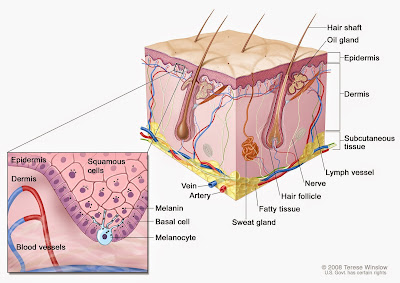
"Melanoma is a cancer that begins in the pigment-producing cells (melanocytes) of the skin. It is considered the least common yet the most serious of the three main types of skin cancer, which also include basal cell and squamous cell cancers.

Skin cancer results from cells that multiply out of control. As a result, tumours, lumps, or masses can sometimes form on normal skin, and can be either benign (non-cancerous) or malignant (cancerous). Some types of cancer are more likely than others to spread to other parts of the body and cause damage. This process is called metastasis. Melanoma is considered the most serious type of skin cancer as it may spread where it continues to grow and destroy tissue."

There are four types of melanoma, based on pathology from my surgery in May, my diagnosis is this: 

"Nodular melanoma (NM) accounts for 15 to 30 per cent of all cases. It most often appears in midlife, usually on the person’s trunk, head, or neck. The onset can be rapid, with NM often developing within several months. Unlike other types of melanoma, it is invasive from the onset and typically appears either as a uniform dark blue-black or bluish-red area, or as an area without any pigment."  (yep, mine was blue-black)

Also I want you to know: 

"The risk of developing a melanoma is greater if a person has a family history of skin cancer, has a lot of moles, or has fair or freckled skin, blue eyes and light-coloured or reddish hair. However, anyone who has had excessive sun exposure, severe and frequent sunburns during childhood, or has lived in a sunny or high-altitude climate is at increased risk of developing skin cancer.

Looking Deeper
Melanoma is caused by overexposure to ultraviolet (UV) radiation from either sunlight or tanning lamps. UV radiation damages genes that regulate cell growth and division. However, genetic predisposition and other factors also play a part. In fact, researchers have identified several genes linked to melanoma. A mutation in the BRAF gene occurs in many melanomas, but is not inherited. In inherited melanomas, changes in genes such as CDKN2A (p16) and CDK4 have been found. Researchers continue to explore ways to treat melanoma based on these new genetic findings."

http://my.pearlpoint.org/resources/melanoma-treatment-general-information-about-melanoma
Melanoma is a disease in which malignant (cancer) cells form in the skin cells called melanocytes (cells that color the skin).

Wow... I'm out of breath, I have skimmed over a wealth of information in these two websites this evening and I have lots to keep me busy reading more!  Linking to the Skin Warrior in BC website, "save your skin foundation"  www.saveyourskin.ca I have found possibility of more support, and new information about my journey.  Check it out if you wish, I will likely yammer on about it more in the near future.  :-)  Especially because I just found the name of my very own stylish-boot wearing medical oncologist from Sunnybrook/Odette listed on the Medical Advisory Committee for this foundation!  Rah Rah I'm excited to get in touch with this group - will keep you posted!

Speaking of keeping you posted, I have yet to tell you about point "1)" of this post, which occurred after the magazine theft but is equally important.  I have a new ouchie... one of the moles causing me concern was removed from the party this aft, poof right there in the Dermatologists office no nurse assisting no nothing.  I had not experienced such a thing, all of my procedures prior have been done at surgeon's office or hospital.  
Local anesthetic was injected and in the blink of an eye my mole was shaved off, placed in a specimen jar full of solution ready to be sent off for analysis, and I have an open wound that is stingy and achy tonight.  It is on my left wrist. No stitches, so the girls were pretty puffed up about the fact that they had stitches for theirs last week and I did not...measly ole' mole removal I had HA!  They're so funny...ha ha HA.  

They did the dishes as I can't get it wet.  So there kids! ;-)

Great news about the girls as well, we got the all clear on their mole excisions from last week yahoo!! I don't have the written report in my hand yet but I will.  Bottom line the pathology confirms their moles are benign, normal, no cancer.  Yah girls!!!! 

We will all continue to watch our skin health, and our lumps and bumps, as I always encourage my family, friends, and acquaintances to do as well.  Check your moles please - I assure you the threat of quarterly visits to the Skin Boss should be motivation enough to stay on top of it.  Ask your family doctor about any spots you may have and they refer you further if they have concern.  

I will also continue to quietly mourn my days of care-free skin love.  I was always fortunate to have sensitive but beautiful skin for which I often received compliments.  It was always one of my favourite features, and I miss it so.  I valued my golden complexion and never suspected it was up to nasty tricks.  Causes me paranoia and self-doubt now, likely more so than any of my other organs.  But... I will continue this journey and see where my skin and I end up. 


Wednesday, November 26, 2014

Pre-Operative Assessment Clinic

You might think that at your Pre-op you would get a feeling for what to expect in your upcoming visit to the hospital at which your surgery will be... a feeling for the facility and the nurses and the other medical professionals that will be taking your life into their hands.  What to expect when you're under the knife, and how you will be handled afterward.  

I am here to tell you that that is not always how it goes - or at least I hope that is not why my day went the way it did yesterday!

I left the building with more confusion than I had when I went in, not very much confidence in the staff that looked after me, and with painful bruises on both of my cubital fossa! (hehe cubital fossa = the inside of your elbows, like, where they put in the needles to take blood - brutal vampire nurse yesterday, just sayin'!)

My Mom and I bombed down to Toronto East General Hospital yesterday to get the lay of the land for my surgery next week, and to provide health stats, bloodwork, and any information about my life that my surgeon may be missing; get all my ducks in a row for surgery.  Other than the bloodwork I think it could all be done by phone or skype, or fax, or smoke signals..?   But no, I had to physically trip down there to dot the i's and cross the t's.

I have done this before, I clearly remember how my pre-op was at Sunnybrook before my surgery in May, and it was no fun either - I am starting to think it may just be a symptom of pre-op visits that they are a shit-show?  You don't actually get to see the surgeon, it is all looked after by nurses and pharmacists, and sometimes the anesthesiologist, though I did not see mine yesterday. 

Overall, the visit did not provide a fantastic first impression of the hospital in which I will spend some time next week.  Maybe I have been spoiled by the excellent care I receive at Sunnybrook, or maybe I just have a bad attitude about this thyroidectomy and node dissection(S) because I hate surgery. AND because I find it truly inconvenient that I have to have parts of my precious body removed, when really I didn't ask for this in the first place! Yes, could be a slightly bad attitude, but I digress.....   

After a lengthy wait in an empty holding room (which to be fair, was nicer than Sunnybrook's pre-op hole in the wall waiting cell), I was escorted to an assessment room to have my vitals taken and my visits with various parties participating in my surgery prep. 

How my blood pressure remained lower than normal through this ordeal I do not know.  The nurse didn't even look at when introducing herself to me, and I find that inexcusable.  I cannot imagine my paperwork being so engrossing that there wasn't time for eye contact.
   
Ah well anyway, after a bunch of paper shuffling and calling of other nurses to figure out just how many vials of blood I needed to give, I was very grateful that my family physician had sent extra printouts for me to take with me in case TEGH didn't receive the faxes from Sunnybrook etc.  Turns out that was smart -yay Doc thanks so much for having my back!  Apparently there was some miscommunication from the surgeon?  Or not enough orders provided? Or..? 

Two hours later, all done, bandaid on one sore cubital fossa (now please remember I get tonnes of pokes these days and I am not fussy about it, I don't watch them do it but I don't cry or wince or bitch either, but this nurse was OUCHIE) (GRRRR), jacket on and in line at the Timmies in the lobby to get a cuppa joe for the long ride home in rush hour traffic, and I hear "hellooooo hello! Hello? Look up!" 
A voice in my head?? Is a deadly chandelier going to fall from the ceiling of this dump and end all my complaints about cancer in one quick crushing blow?  Nope. No such luck.  It was my no-eye contact vampire nurse calling from the open balcony above the lobby, asking me to please come back up - she found the paperwork and she was so glad she caught me in the lobby!  grrrrr

Two more bad pokes and five more vials of blood with two more nurses involved to confer over whether or not they had the right vial colours for my apparently fancy blood test orders (does "ionized calcium" ring a bell to anyone?) that had to be contained on ice, and another 20 minutes later I was heading back downstairs to my exasperated MotherBear who had somehow contained her obvious criticism of the situation (remember, she is a retired nurse who has many times offered to do my bloodwork for me herself! LOL). We ditched the coffee run and instead broke free for the parking lot.  Yes, we actually ran. As in, get us outta here!!!  

Overall, not a great first impression of TEGH, and I said as much to my surgeon's assistant this morning.  She apologised for the inconveniences and assured me she needed to know how things went so she can monitor their dealings with other hospitals at which her boss works.  She said that I should in no way doubt my surgeon, that despite the bad first impression of the hospital, she is completely confident that I will be well taken care of next Wednesday when directly in my surgeon's hands.  oh dear.  I hope so!!  yikes.

One of the highlights of the excitement yesterday, and the reason for my hasty call to the surgeon's office this morning, was that the nurses blithely stated that I should plan on a three day stay in the hospital - THREE DAYS IN ADDITION TO SURGERY DAY.  WHAT?? I asked several times if she was sure, if that is common, if she was sure, as the surgeon told me himself that as long as everything goes okay I will be released the next day.  

She said yes plan for three days and I asked repeatedly how I could find out for sure as this would be crucial information to know as I have a young family and we live three hours away!?  She said she didn't know but was pretty sure - I suggested that having a backup plan in case of emergency something goes wrong is far different from PLANNING for a three day stay.  Aaaarrrghhhhh 

Long story short, this morning my surgeons office confirmed that I need only plan for one nights stay, unless there should be an emergency.  They used to keep people in intensive care for three days after a thyroidectomy, due to necessary monitoring of calcium levels, but not anymore.  So... as it stands, I am expecting to come home Thursday Dec. 4.  

Lots of shuffling has happened since I got the surgery date, but we are now one week out and I think it is all organised.  Scott will be taking me to my operation, we will be in Toronto Tues. Dec. 2 through Thurs, Dec 4, and my Mom is coming to stay with the girls and taxi them to and from school, ankle x-rays, and play performances etc.  Then Scott leaves for work likely on the Friday, Mom will stay until Sunday, and Grandma Iris is coming first of the following week to help taxi and look after the girls while I rest and recuperate for a few more days.  Yes, I do expect to get some much-needed rest in my cozy master suite LOL - can I start now??  ;-) 

No confirmation of post-operative assessment date, but looks like it will be one week after surgery, on or about Dec. 11, 2014.  

In any case, I suppose I am grateful that the pre-op is over with and an accomplishment to add to my cancerous list, but I am grateful that my post-op care will continue at Sunnybrook and the whole thing will be behind me about a week from now.  I will be tired I am told, and I will have to start taking a supplement to replace my natural thyroid function, and I will have to start taking a calcium supplement, but otherwise everything is rolling along as it should. 

I am just about to the point where there is nothing else I can do to prepare for this thing, so I have to let it all go and just roll with it.  I lost control of this bus ages ago!!


I'm not supposed to look this stuff up, but if you want to know more about my diagnosis of Papillary Thyroid Cancer, this is where I would maybe start looking. Here too.  :-)  Oh and Canadian site here: http://www.thyroidcancercanada.org/


Thyroid Hormone Replacement and Papillary Thyroid Cancer?
Regardless of whether a patient has just one thyroid lobe and the isthmus removed, or the entire thyroid gland removed, most experts agree they should be placed on thyroid hormone replacement for the rest of their lives. This replaces the hormone in those who have no thyroid left, and to suppress further growth of the gland in those with some tissue left in the neck.
There is good evidence that papillary carcinoma responds to TSH secreted by the pituitary, therefore, exogenous thyroid hormone is given, which results in decreased TSH levels and a lower impetus for any remaining cancer cells to grow. Recurrence and mortality rates have been shown to be lower in patients receiving suppression.